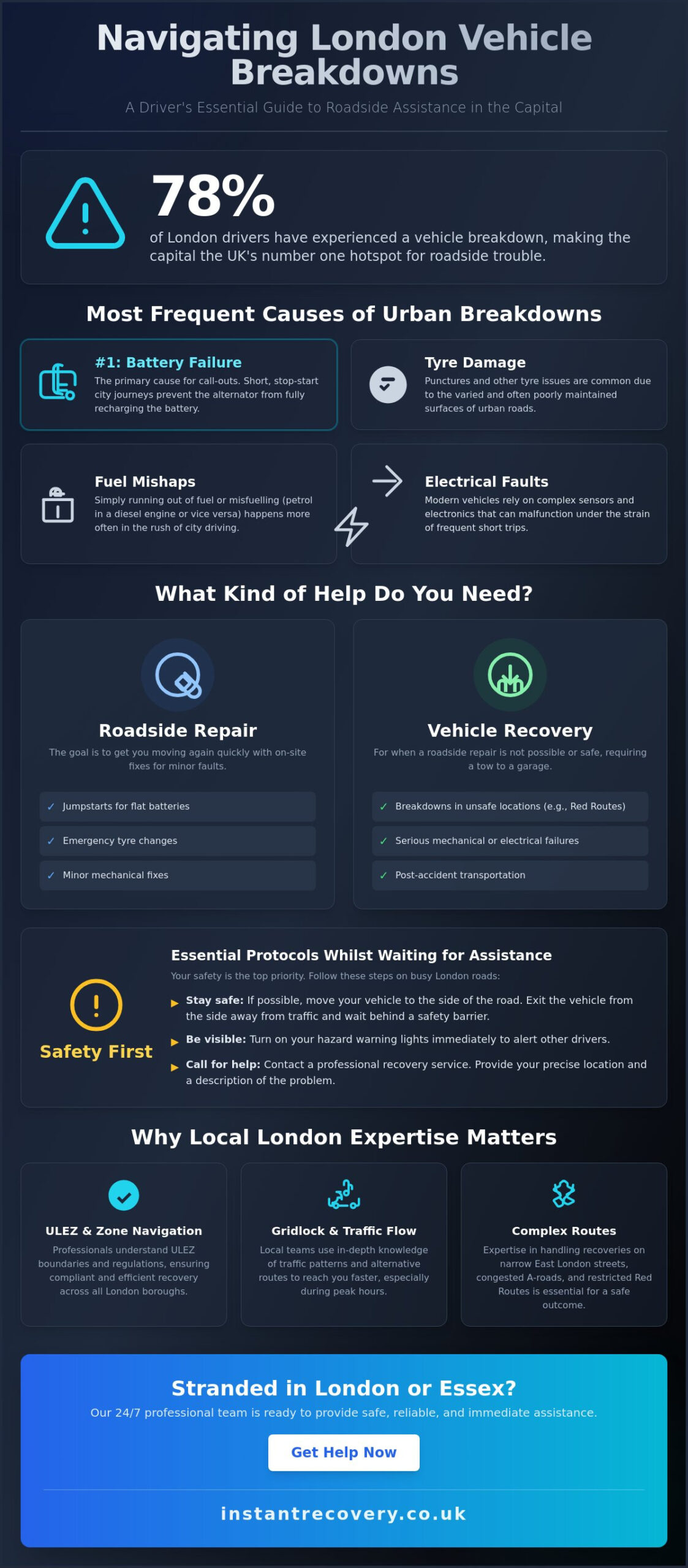
Did you know that 78% of London drivers have experienced a vehicle breakdown, making the capital the UK’s top hotspot for roadside trouble? Whether you are stranded on a congested A-road or stuck within the Ultra Low Emission Zone, the sudden silence of a failing engine is enough to rattle even the most experienced motorist. Finding reliable emergency roadside assistance London drivers can trust is about more than just a tow; it’s about ensuring your safety whilst navigating the city’s complex traffic and strict regulations.
We understand that your primary concerns are likely the safety of your passengers, the fear of hidden charges, and the frustration of waiting in heavy traffic. It’s a high-stress situation, but you don’t have to face it alone. This guide is designed to help you navigate vehicle breakdowns safely and efficiently with expert roadside assistance across London and Essex. You’ll discover the essential steps to take immediately after a failure, how professional teams handle ULEZ compliance, and exactly what to look for to ensure your vehicle is handled with the professional care it deserves.
Key Takeaways
- Learn the difference between on-site fixes and full vehicle recovery to ensure you request the most appropriate support for your situation.
- Identify the most frequent causes of urban breakdowns, such as battery failures and tyre damage, to better manage common roadside risks.
- Discover essential safety protocols for waiting on Red Routes and busy A-roads whilst professional emergency roadside assistance London teams are en route.
- Gain a clear understanding of what a professional recovery process looks like, from the arrival of a liveried vehicle to a thorough diagnostic check.
- Navigate the logistical challenges of the capital, such as ULEZ boundaries and narrow East London streets, by leveraging the knowledge of local experts.
What is Emergency Roadside Assistance in London?
Breaking down in the heart of the capital can feel overwhelming. Unlike a quiet country lane, London’s streets are a complex web of Red Routes, Ultra Low Emission Zones (ULEZ), and constant traffic flow. In this environment, emergency roadside assistance London services act as a vital safety net. It’s more than just a mechanic arriving at your side; it’s a coordinated effort to ensure your safety whilst keeping the city moving. Professionals in this field understand that a disabled vehicle on a busy A-road is a significant hazard that requires immediate, expert attention.
At its core, What is roadside assistance? It’s the immediate mechanical support or vehicle recovery provided to motorists who find themselves stranded. Because London never truly sleeps, these teams operate around the clock to address issues ranging from simple non-starts to more complex mechanical failures. Rapid response is essential here. Every minute a vehicle sits stationary on a busy junction increases the risk of a secondary collision and adds to the city’s congestion. By acting as a “Caring Guardian,” recovery teams provide a calm, steady presence that helps de-escalate the stress of a breakdown.
Roadside Repair vs. Vehicle Recovery
Understanding the difference between a repair and a recovery helps set your expectations during a stressful moment. Whether you need a quick fix to get back on your way or a full tow to a safe location, professional teams prioritise the most efficient and safe solution for your specific situation.
- Roadside Repair: This involves on-site fixes such as a Jumpstart or an Emergency Tyre Change. If the fault is minor and the location is safe, the goal is to get you moving again immediately.
- Vehicle Recovery: When a vehicle cannot be repaired safely at the roadside, it requires Vehicle Recovery. This involves professional towing to a garage or a secure location. For EV owners, it is especially important to note that a standard tow can cause permanent damage to an electric motor, which is why electric vehicle recovery London specialists use a dedicated “wheels-up” approach to protect your high-voltage system.
Experts decide the best course of action by assessing the vehicle’s fault and the safety of the surrounding environment. If you’re on a narrow street or a high-speed road where stopping is restricted, recovery is often the safest path to protect you and your vehicle.
The 24/7 Nature of London Assistance
London’s road network is unpredictable. You might face a battery failure during the morning rush in Barking or a puncture at midnight near Ilford. Reliability means being available whenever the call comes in. During peak hours, assistance teams use local knowledge to navigate through gridlock, whilst late-night call-outs require a specifically supportive approach. Being stranded in the dark is a high-stress experience, so a composed, professional presence is just as important as the mechanical tools on the van. These experts move you from a point of distress to a clear resolution, ensuring you are never left to navigate a breakdown alone.
Common Causes for Roadside Call-Outs in the Capital
Whilst modern vehicles are more reliable than ever, the unique pressures of driving in the city create specific mechanical challenges. Whether you are navigating the dense traffic of Central London or the industrial routes through Essex, your car is subject to constant stop-start cycles that wear down components faster than motorway cruising. Understanding these common triggers can help you spot trouble before it leaves you stranded. When the unexpected does happen, knowing that emergency roadside assistance London experts are familiar with these urban-specific faults provides much-needed peace of mind.
Beyond the most frequent culprits, we often see drivers struggling with fuel-related mishaps. In the rush to reach a petrol station before the Congestion Charge zone or a timed delivery slot, it’s surprisingly easy to misfuel or simply run dry. Electrical faults also rank highly; modern cars rely on complex sensors that can occasionally malfunction during short, high-heat city trips. If you find yourself in this situation, a professional assessment is the safest way to determine if a simple fix is possible or if more significant support is required. As the number of EVs on London’s roads continues to grow, drivers should also be aware that running low on charge in the Congestion Charge zone requires a very different response — one covered in detail in this specialist guide to electric vehicle recovery London drivers can rely on in 2026.
Maintaining engine health is key to avoiding these sudden failures. For motorists interested in enhancing their vehicle’s efficiency and responsiveness, Naked Frog Vehicle Tuning provides specialist mobile remapping services. Although they focus on the North East, their approach to engine optimisation highlights how professional tuning can contribute to a more reliable driving experience overall.
Battery Issues and Urban Driving
Battery failure remains the primary reason for non-starts in the capital. The problem usually stems from the nature of city travel. Short journeys don’t allow your alternator enough time to fully replenish the energy used to start the engine, especially when you’re running heaters, lights, and wipers simultaneously. Over time, the battery’s charge level drops until it can no longer turn the engine over.
Securing dead battery roadside help London requires professional equipment rather than just consumer cables because modern vehicle electronics are extremely sensitive to the voltage fluctuations common in domestic jump-leads. Before you get stuck, look out for warning signs like a sluggish engine crank or dimming dashboard lights. If your car feels hesitant to start, it’s often a signal that the battery is nearing the end of its reliable life. Drivers in the local area can also call on a dedicated jump start Barking service that uses specialist equipment to protect your car’s sensitive electronics whilst getting you back on the road quickly.
Tyre Emergencies on Busy Roads
London’s roads can be unforgiving on rubber. In 2025, RAC patrols attended 26,048 breakdowns caused by poor road surfaces, highlighting how easily a pothole or debris can end a journey. Attempting a DIY tyre change on a narrow London street or a busy Red Route is incredibly dangerous. The proximity of passing traffic and the lack of space make it a task best left to those with the right safety gear and lighting.
Professional teams come equipped to handle specialised equipment, such as locking wheel nuts and high-pressure jacks, ensuring the job is done quickly and safely. Following National Highways safety advice is crucial when you have a puncture on a major road; staying inside the vehicle or behind a safety barrier is always the priority. If you’re worried about a damaged wheel, reaching out for a roadside tyre change East London service ensures you and your vehicle are handled with professional care.
Staying Safe Whilst Waiting: Essential London Protocols
The moments immediately following a breakdown are often the most stressful. Whether you are dealing with a sudden engine failure on the North Circular or a puncture in a quiet residential street, your safety is the absolute priority. We adopt a “Caring Guardian” approach, which means our first concern is moving you and your passengers to a position of protection. In the busy environment of the capital, being stationary for even a few minutes can create a hazard for other road users. Knowing exactly how to manage your vehicle’s visibility and your own physical safety is the best way to prepare for emergency roadside assistance London teams to arrive.
If your car is still movable, try to pull into a safe location away from the main flow of traffic. However, London’s roads don’t always offer that luxury. If you find yourself stranded on a narrow street or a high-speed junction, keep your hazard lights on and, if it’s safe to do so, use your sidelights in poor visibility. It’s about making your presence known to the thousands of other drivers sharing the road without putting yourself in harm’s way.
Breakdowns on Red Routes and Motorways
Red Routes are strictly managed to keep London moving, and stopping is generally prohibited. If you break down here or on a major artery like the M25, the rules for safety change. You should never stay inside the vehicle if you are on a high-speed road or a “smart motorway” where there is no traditional hard shoulder. Instead, exit the car through the passenger side doors, away from the traffic, and wait behind a safety barrier if one is available. Remember that the police have the authority to remove vehicles from motorways for safety reasons, which can incur a fee of £150 plus daily storage costs, so calling for professional emergency roadside assistance London quickly is the best way to manage the situation professionally.
Effective Communication with Your Recovery Team
Accuracy is your best friend when you’re waiting for help. When you call, provide the make, model, and colour of your vehicle, along with a brief description of the mechanical behaviour you noticed. Did the engine splutter? Was there a sudden loss of power? This information helps the technician prepare their tools before they even arrive. If you’re in an unfamiliar part of East London or a sprawling hub like Barking, use digital tools like “what3words” or share your live location via a smartphone app. This ensures the recovery driver can find you amongst the maze of London streets. Whilst you wait, try to keep your phone battery preserved by closing unnecessary apps, as staying reachable is vital for a smooth and supportive resolution.
What to Expect from a Professional Recovery Service
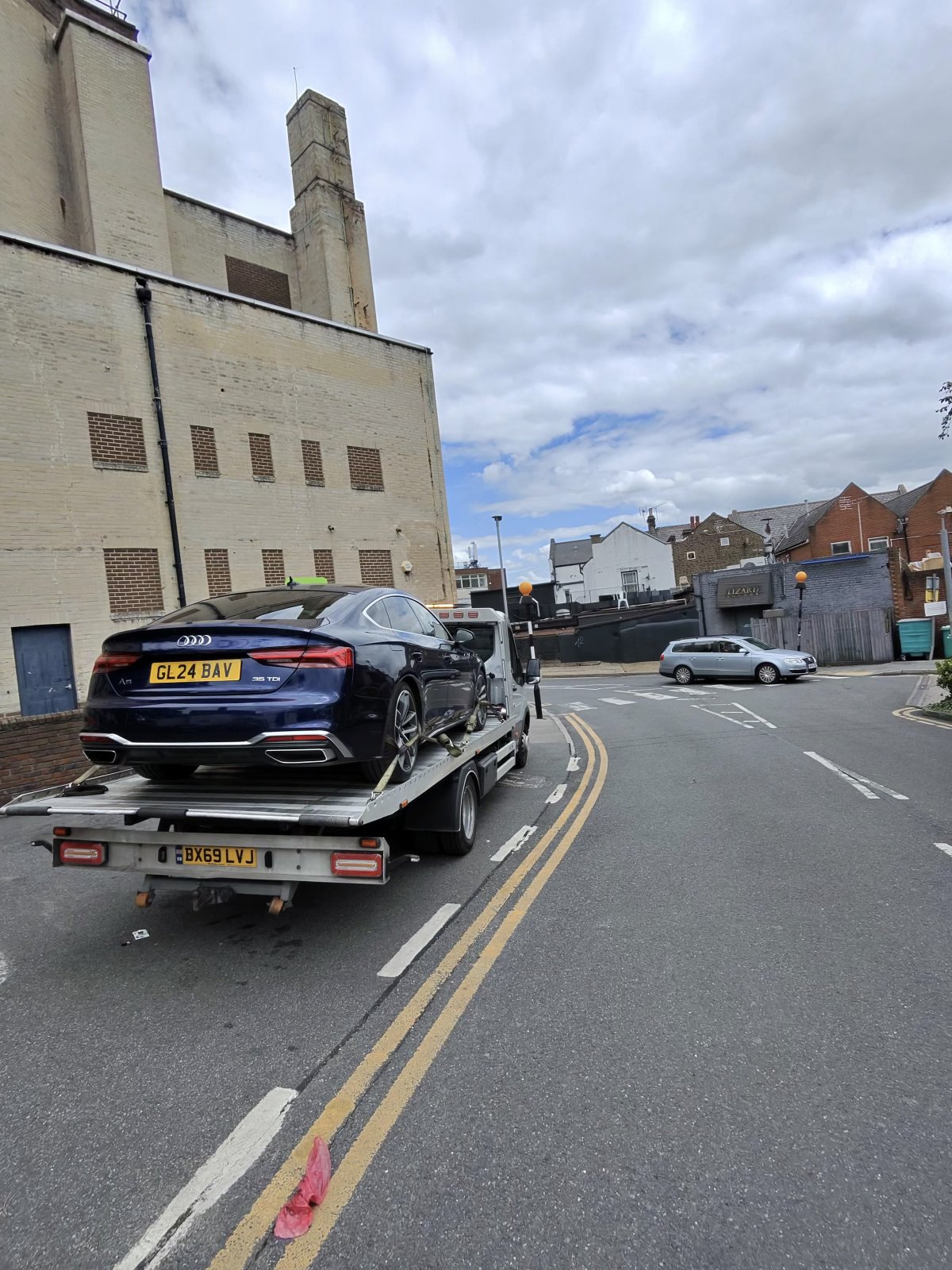
The arrival of a professional team marks the transition from distress to resolution. When you call for emergency roadside assistance London, you aren’t just paying for a tow; you’re investing in a professional process designed to protect you and your vehicle. A liveried vehicle and a uniformed technician provide immediate reassurance that help has arrived from a legitimate, insured source. This professional appearance is the first sign of a “Caring Guardian” approach, moving the situation from a roadside crisis to a managed and supportive resolution.
Once on-site, the technician performs a methodical diagnostic check. This isn’t a rushed process; it’s a thorough assessment to determine if an on-site fix, such as a jumpstart, is possible or if your vehicle requires a tow to a local garage. Every decision is explained clearly, ensuring you understand the reasoning behind the action. This transparency extends to the paperwork and payment, where honesty and respect are paramount. We believe in providing a fair service without the hidden fees that can often plague the industry, ensuring that the final stage of the process is as stress-free as the first.
The Recovery Vehicle and Equipment
Not every breakdown requires the same solution. Depending on your vehicle’s drive system and the nature of the fault, different towing methods are employed to ensure the safety of your car. Flatbeds are ideal for total lifts, whilst “spectacle” or underlift trucks are often used for navigating tight urban spaces or multi-storey car parks. Using professional vehicle recovery London services ensures that the correct equipment is used to protect your car’s bumper, undercarriage, and suspension from damage during transit. Every technician should be fully insured and certified, treating your property with the same care they would their own.
Estimated Time of Arrival (ETA) Realities
Navigating London’s traffic is a logistical challenge that requires local expertise. Whilst we strive for speed, the reality of the M25 or the Blackwall Tunnel means that response times can vary depending on the time of day. A reliable service mitigates this by having local bases in East London and Essex, allowing drivers to use back-route knowledge to reach you faster. You should expect regular updates whilst you wait, as a composed and supportive team keeps you informed of their progress. If you find yourself in need of help, you can contact our team for immediate assistance and experience a service built on reliability and care.
Why Local Expertise Matters for London and Essex Drivers
Navigating the narrow terraced streets of East London or the busy commercial hubs of Barking and Ilford isn’t a job for someone following a generic sat-nav. Local expertise means knowing which side streets to take when the A13 is gridlocked and understanding the specific parking restrictions that could complicate a recovery. When you choose emergency roadside assistance London teams who live and work in the area, you’re getting a service that understands the rhythm of the city. We treat every driver like a “Reliable Neighbour,” providing a level of care that a nationwide call centre simply cannot match.
This local connection also extends to the relationships we maintain with independent garages across the region. If your vehicle requires a tow, being able to recommend a trusted local specialist for your specific make or model ensures a seamless transition from the roadside to the workshop. We don’t just drop your car and leave; we ensure it is placed in professional hands, maintaining that sense of protection until the very end of the process. It’s about being a steady, helpful presence in a community we know inside out.
The East London Advantage
Local knowledge of the A12, A13, and the often-congested Blackwall Tunnel is critical for reducing response times. Because our recovery centre is based in the heart of the community, we can often bypass the worst of the traffic using routes that only a local driver would know. This efficiency is vital when you are stranded in a vulnerable position. Supporting local independent businesses also means you are helped by people who understand Essex driving conditions and the specific needs of motorists in our corner of the country.
Compliance with London Road Laws
London’s road laws are amongst the strictest in the world, and they change frequently. We ensure our own recovery trucks are fully ULEZ compliant to protect both the environment and our customers from unnecessary complications. This expertise is particularly helpful if you are looking to dispose of a vehicle; our scrap car London service handles collections in strict accordance with London environmental regulations. Whether we are navigating the complexities of Low Traffic Neighbourhoods (LTNs) or ensuring your vehicle is recovered without breaching local bylaws, our team manages every detail with professional integrity. Using emergency roadside assistance London experts who understand these nuances ensures your breakdown doesn’t result in an unexpected fine or legal headache.
Secure Your Journey with Confidence
Navigating the capital’s roads requires more than just a working vehicle; it demands an understanding of the city’s unique logistical challenges. Whether you are managing a battery failure on a busy A-road or navigating the strict boundaries of the ULEZ, your safety and peace of mind should always come first. By prioritising essential safety protocols and choosing experts who understand the local landscape of East London and Essex, you can transform a stressful breakdown into a manageable situation. Reliability is the cornerstone of effective emergency roadside assistance London, ensuring that you are never left to face the city’s traffic alone.
Our 24/7 emergency dispatch and fully insured professional team are here to provide the supportive care you need. As specialists in East London and Essex, we take pride in being the “Reliable Neighbour” you can count on for honest, efficient service. If you find yourself stranded, Get immediate roadside assistance from Instant Recovery now. We have everything under control, so you can focus on reaching your destination safely. Travel with confidence, knowing that expert help is always ready to assist you.
Frequently Asked Questions
What is the fastest way to get roadside assistance in London?
The most efficient way to secure help is to contact a local provider directly rather than waiting for a national call centre to process your request. Local teams based in East London or Essex have a superior understanding of back routes and traffic patterns on the A12 and A13, allowing them to bypass gridlock that might stall a non-local driver. Providing your precise location via digital tools like what3words can also significantly reduce the time it takes for a recovery vehicle to reach you.
Can I get help if my car breaks down on a Red Route?
Yes, you can certainly receive assistance on a Red Route, but you must act quickly to ensure safety and maintain traffic flow. Whilst stopping is usually strictly prohibited, a genuine mechanical failure is treated as an emergency. It’s vital to call for emergency roadside assistance London experts who are familiar with these high-pressure zones. They will prioritise your safety and work efficiently to move your vehicle to a legal stopping point or a secure garage as soon as possible.
What information do I need to provide when calling for recovery?
To help the technician prepare, you should provide your vehicle’s registration number, make, model, and colour. It’s equally important to describe the nature of the fault, such as whether the engine is turning over or if you have a flat tyre. Clear location details, including nearby landmarks or specific road junctions, ensure the driver can find you without delay. Staying reachable on your phone is essential so the team can provide you with regular arrival updates.
How much does emergency roadside assistance typically cost in London?
Industry data from March 2022 suggests that a single pay-as-you-go emergency call-out in the UK can range between £40 and £120 for those without an annual policy. If your vehicle is removed from a motorway by the police, the set fee is £150, which may also include daily storage costs of approximately £20. Whilst costs vary based on the complexity of the recovery and the distance travelled, a professional service will always provide a clear and honest explanation of any charges before work begins.
Will my car be towed to my house or a garage?
The destination for your vehicle is entirely your choice, depending on what is most convenient for your situation. Whether you prefer the car to be taken to your home address or a local independent garage for immediate repair, the recovery team will accommodate your needs. Professional drivers can often recommend trusted local specialists in East London or Essex if you aren’t sure where to take your vehicle for mechanical work.
Can a roadside assistance team fix a dead battery on-site?
Yes, a professional Jumpstart is one of the most common on-site fixes provided by recovery teams. Using specialised equipment is much safer for your car’s sensitive electronics than using standard consumer cables. If the battery is found to be completely failed and cannot hold a charge, the technician will discuss the next best steps, which may include recovering the vehicle to a safe location or a garage for a replacement.
What happens if my vehicle is not ULEZ compliant and needs recovery?
If your vehicle breaks down within the Ultra Low Emission Zone, you don’t need to worry about the recovery truck itself causing additional issues. Professional recovery vehicles are typically ULEZ compliant, meaning they can enter the zone to collect your car without incurring fines for their own movement. The team will handle the logistics of moving your non-compliant vehicle safely out of the zone or to a repair centre, ensuring all environmental regulations are strictly followed. If your non-compliant vehicle is beyond economical repair, our guide to scrapping a non-compliant scrap car in London can help you navigate the legal and financial steps to dispose of it correctly.
Is roadside assistance available 24/7 in East London and Essex?
Reliable support is available around the clock to ensure you are never left stranded, regardless of the time or weather. Whether you face a battery failure during the morning rush hour or a puncture in the middle of the night, emergency roadside assistance London providers operate 24/7. This constant availability is part of a “Caring Guardian” approach, providing a composed and supportive presence whenever you find yourself in a high-stress roadside situation.